Lifecycle Experiments
Part of First-purchase lifecycle journeys
Evaluating first-purchase journeys without coupon bias
Evaluate a first-purchase journey by asking whether it helps eligible people buy, and at what incentive cost.
Evaluate a first-purchase journey by asking whether it helps eligible people buy, and at what incentive cost. A coupon may make the dashboard look successful while discounting purchases that would have happened at full price.
Separate observation from impact
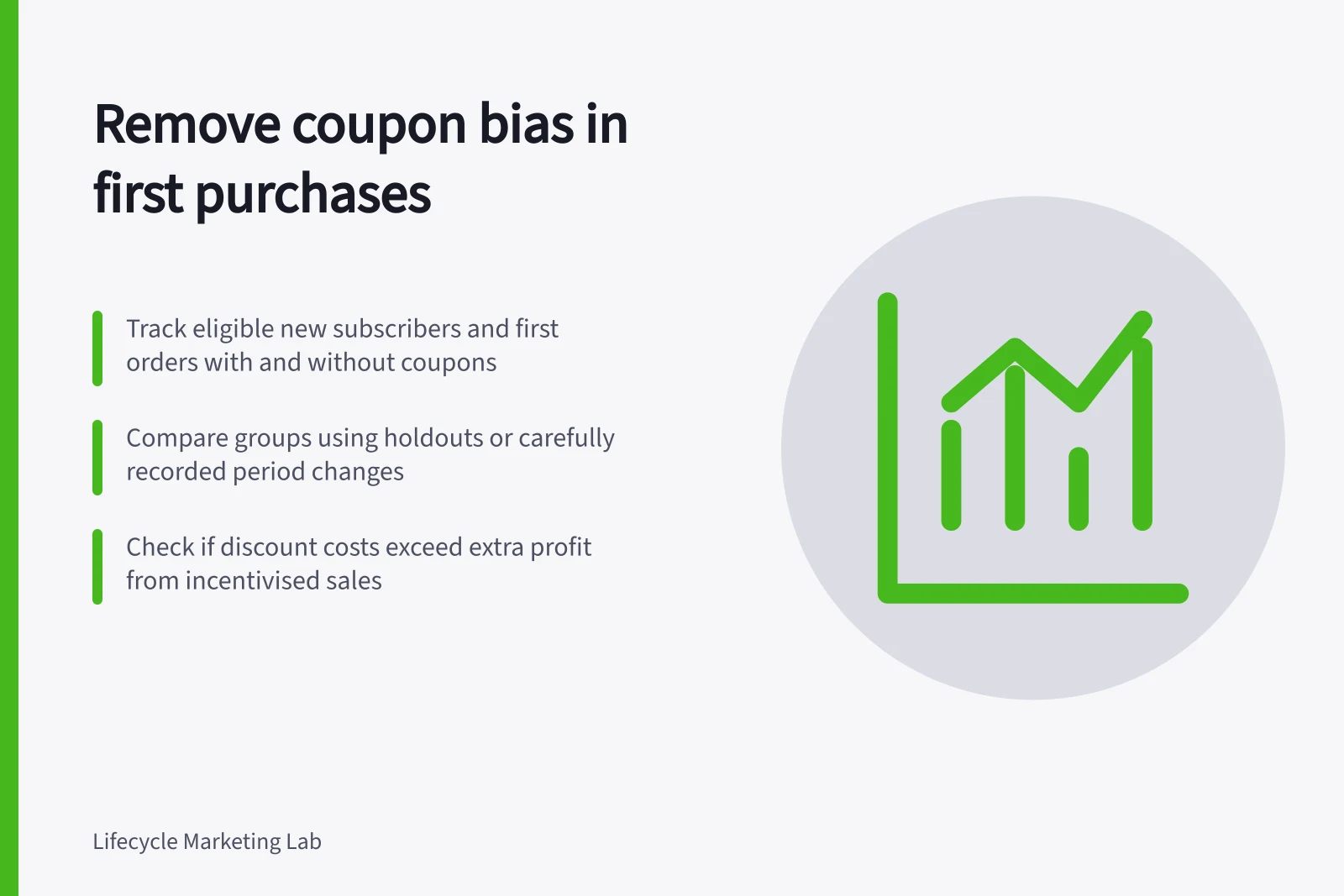
Record the number of eligible new subscribers, deliveries, first orders, revenue and discount value over a stated period. Klaviyo's flow analytics reports attributed revenue, conversions, conversion rate and unique recipients. These are descriptive measures, but attribution follows the platform's rules and does not establish the counterfactual: what would these people have done without the journey?
If the platform and audience size allow, compare a group receiving the journey with a randomly assigned holdout that receives only necessary service messages. Keep eligibility and measurement windows the same.
If a holdout is not feasible, compare periods cautiously and record changes in seasonality, acquisition channels, offers and site experience. Attach the period compared and the confounders recorded to any period-based result.
Inspect the coupon path
Track who receives a code, who redeems it and whether they had already started checkout or were likely to buy without a prompt. For each code recipient, flag whether they entered checkout before the code message; report orders from that group separately from orders from recipients with no prior checkout activity. A welcome journey can provide useful product guidance before introducing an incentive.
Compare gross sales with margin after discount and campaign costs using the organisation's verified figures. A higher order count may still be a poor result if the incentive costs more than the extra contribution it creates. Avoid inventing a universal target for conversion or discount rate.
Check the customer experience
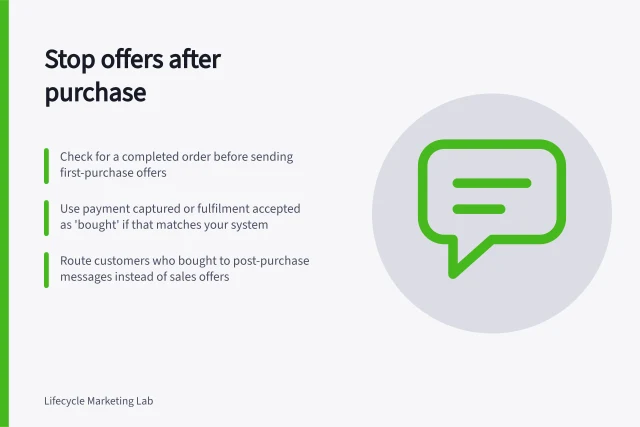
Count offers sent after purchase, repeated coupons and conflicting messages from other flows. Review unsubscribes and support complaints alongside revenue. A journey that lifts attributed sales but routinely sends the wrong offer needs repair.
Write the decision rule before reviewing results: continue, revise timing or content, reduce the incentive, or stop. A coupon should be used because it addresses a demonstrated barrier for this audience.
Pros and Cons of Using Coupons in First-Purchase Journeys
- ProsDrives early conversions; provides product guidance; increases initial engagement with the brand.
- ConsMay attract price-sensitive customers; risks eroding margin; can lead to repeated discount requests; may conflict with other marketing messages.