Onboarding Journeys
Part of First-purchase lifecycle journeys
Connecting signup intent to a first-purchase message
The first purchase-oriented message should follow the reason a person signed up.
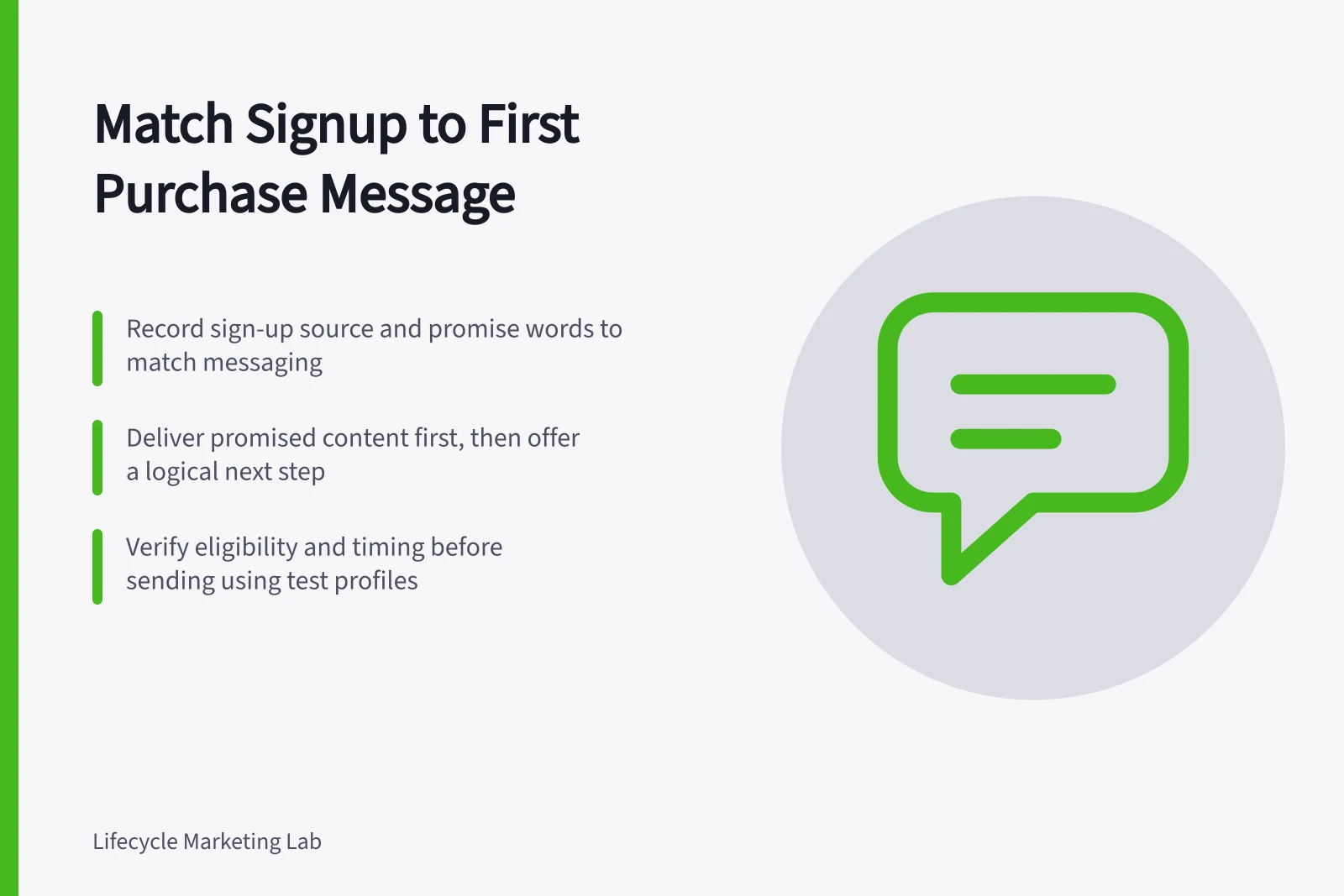
The first purchase-oriented message should follow the reason a person signed up. Deliver the promised guide, update or benefit first, then offer a next step that relates to it. A generic coupon can be jarring when someone joined to solve a specific question.
Capture the promise at sign-up
Record the form or campaign that brought the subscriber in and the words used on it. “Get the desk-size guide” signals a different need from “Hear about new releases”. Map each source to one first message. If the source is unknown, use a broad welcome that explains the range and lets the reader choose a path rather than inventing an interest.
Klaviyo's welcome-series guidance covers creating a sequence of emails sent directly after someone subscribes; it also notes that a pre-built welcome series and a flow library with different ideas are available.
Klaviyo Welcome Series & Flow Library Features
- Pre-built welcome series availableYes
- Flow library with message ideasYes
- Profile filters applied at flow entry and before each emailYes
Answer before selling
A sizing-guide sign-up might receive the guide, one example of how to use it and a link to the relevant product range. A webinar sign-up might receive the event details and later a related product explanation. Keep the first email's main action close to the sign-up promise. If a purchase action appears, make it a logical next step rather than replacing the promised content.
Check that the reader can tell why they received the message. Name the source or topic in natural language. Avoid an overly personal assertion such as “You are ready to buy” when the only evidence is a form submission.
Verify eligibility and timing
Before sending, confirm the relevant subscription status and whether a purchase has already occurred. A person might sign up and buy in the same session. If the journey waits a day, its purchase check must happen again at send time. Klaviyo documents that profile filters are applied when people enter a flow and before every email in the flow is sent, but each implementation needs its own test.
Use a test profile for each entry source and one profile with an order soon after sign-up. Inspect the actual message, not only the trigger log. If the content does not match the promise, or the buyer still receives the prospect appeal, fix the map. The first message sets the journey's credibility; it should prove that the sign-up choice was heard.